Home / Emperors / Han Dynasty
Emperor Wen of Han
汉文帝
Liu Heng, c. 203 – 157 BC · Fifth emperor of the Han dynasty
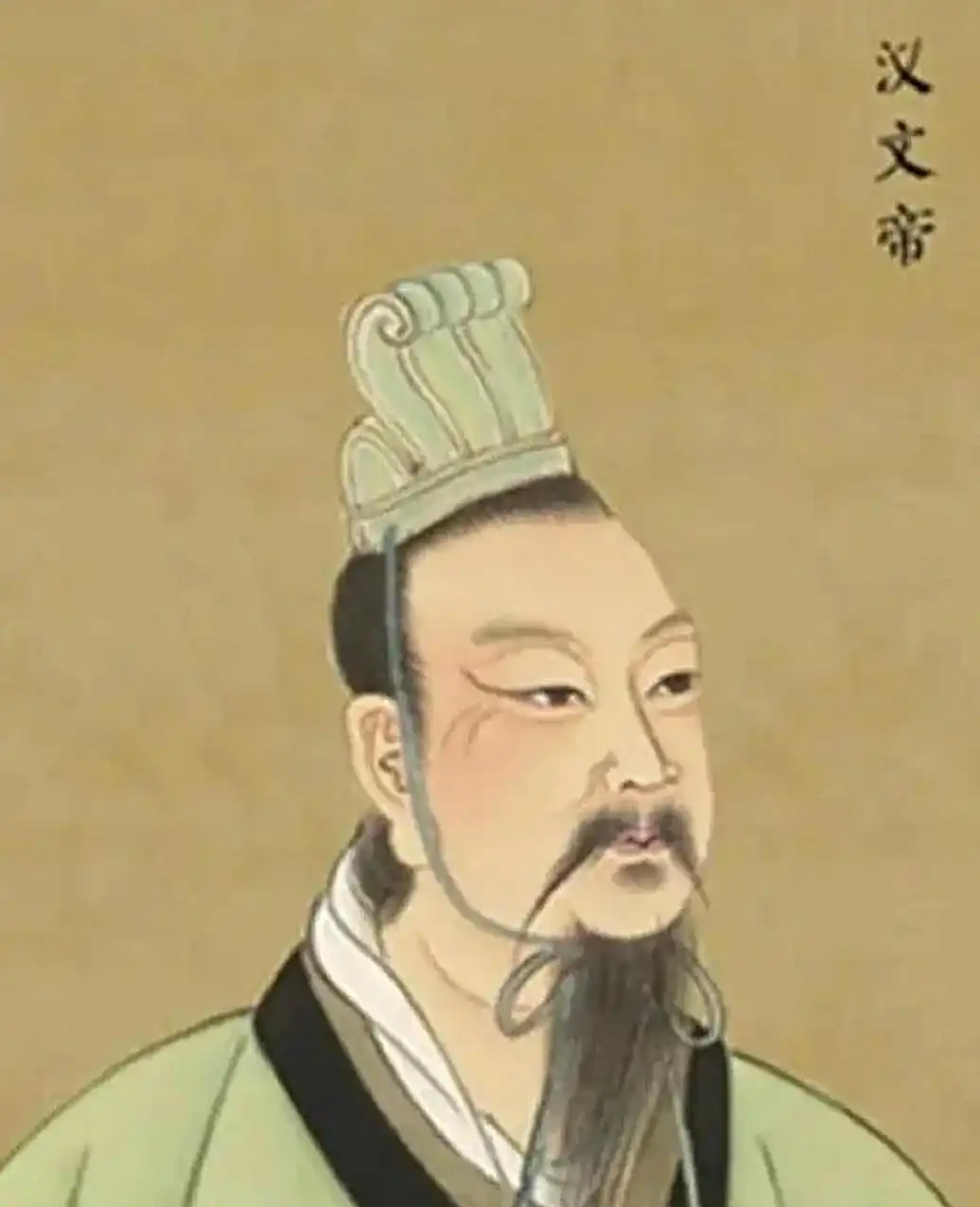
The emperor the Chinese remember as Wen — "the cultured one" — came to the throne in 180 BC because a group of generals and ministers needed a man they could live with. They had just wiped out the family of the empress dowager Lü, killed the boy she had put on the throne, and were looking through the imperial clan for someone old enough to reign, weak enough to be safe, and free of relatives who might one day settle scores with them. Liu Heng, king of Dai, suited them on all three counts. He was in his early twenties. His mother's family was nobody. He had spent sixteen years governing a poor, exposed strip of frontier in the far north, and had never once been a candidate for anything.
What he did next is the reason he is remembered. For twenty-three years he governed mainly by subtraction. He cut the land tax twice and then suspended it altogether. He abolished the punishments that mutilated a man's body and left him marked for life. He reduced the standing expenses of the court until they resembled those of a modest household, and he never once took his armies deep into the steppe. Historians call the result the Rule of Wen and Jing, and treat it as the ground on which his son and grandson built the empire that broke the Xiongnu and opened the roads west.
But a subtraction is still a decision. He left the great kings of the east alone, and his son had to fight them. He gave away the state's monopoly on coinage and let a favourite mint money with his own name on it. He removed the mutilating punishments without asking carefully enough what should take their place. This is the shape of his reign: twenty-three years of not doing things, and a bill that came due after he was dead.
1. The Son Nobody Was Watching
Lady Bo, the future empress dowager, began as a concubine of the king of Wei. When Wei was destroyed by the Han general Han Xin, she was taken to the workshops of the new dynasty and set to weaving. She was still there when Liu Bang, passing through the workshops one day, noticed her and had her brought into his harem. He then forgot about her for more than a year.
Her introduction to the founder of the Han came, as the Records of the Grand Historian tells it, out of a joke told by two women who had already been favoured. Lady Bo had once been on good terms with them, and the three had promised each other that whichever of them rose first would not forget the others. One day they were laughing over this promise within Liu Bang's hearing. He asked what was funny, and they told him. He felt sorry for Lady Bo, and that night he sent for her. She said to him that she had just dreamed a dragon had lain upon her belly. He answered that it was a good omen and that he would bring it about. She conceived that night and bore a son.
That son was Liu Heng. He was born in 203 BC, or by another reckoning in 202 — the sources do not agree, and the difference matters chiefly to the arithmetic of his age. Once born, he became the reason his mother was no longer worth noticing. Liu Bang rarely saw her again. Of the eight sons he left behind, the ones with mothers who pleased him were destroyed; Liu Heng's mother pleased no one and survived.
In 196 BC, after the rebellion in the northern frontier was put down, Liu Bang made his eight-year-old son king of Dai, with his seat at Jinyang in what is now Shanxi. It was not a great prize. The kingdom backed onto the northern frontier and had the Xiongnu on the other side of it. But it was far from Chang'an, and distance was what kept the boy alive. In the years that followed, the empress dowager Lü set about the sons of her dead husband. Liu Ruyi, the child of the emperor's favourite, was made king of Zhao and then poisoned. Liu You, made king of Zhao, was shut up until he starved. Liu Hui, made king of Zhao, was forced into a marriage he could not bear and took his own life. Three kings of Zhao in succession, three deaths.
The dowager offered him Zhao as well, and he declined it. It is the single most important political act recorded of his youth, and the histories treat it as a sign of his modesty. It was also arithmetic. Perhaps he understood something that flattery would have prevented him from seeing: that the throne's second-best gift was its most reliable way of killing a young man. He stayed in the cold. His mother, being inoffensive and careful, was allowed to go with him. And he gathered around himself the men of a frontier court — Song Chang, his commandant, and Zhang Wu, who ran his household — who would matter more than any of them knew.
2. The Envoys from Chang'an
The empress dowager died in 180 BC. Within weeks the capital was in the hands of the men she had spent fifteen years holding down. Zhou Bo, the grand commandant, walked into the camp of the northern army with nothing but an imperial tally, called on the soldiers to bare their left shoulders in support of the Liu family, and got them. The Lü clan was destroyed, its leaders killed in the palace and in the streets. The boy emperor, known to history as the second boy emperor, was put off the throne on the ground that he had never really been the son of the emperor Hui at all, and then quietly killed, along with three of his brothers.
That left the question of who should rule. The strongest candidate was Liu Xiang, king of Qi, grandson of the founder through his eldest son and the man whose brothers had fought hardest against the Lü. He was rejected. The reason given was his uncle: Si Jun, his mother's brother, was a man whom the histories describe as a tiger wearing a hat. To enthrone the king of Qi would be to raise up a second Lü family, and the ministers had just spent a bloody afternoon abolishing the first. The choice fell instead on the man who was not there, who had no party, and whose mother's kin could not raise a hundred soldiers between them.
When the envoys reached Dai, the court spent a day arguing about whether to believe them. Zhang Wu thought it was a trap. The great ministers of the Han, he pointed out, had all been generals under the founder; they knew war and they knew deceit. They had just killed an emperor. What was to stop them from luring the king of Dai to Chang'an and killing him too? The advice was to plead illness and send no answer.
Song Chang answered him, and it is worth following the argument, because it is why the Han lasted. He gave three reasons why the empire belonged to the Liu family and to no one else. First: when Qin fell, every ambitious man in the country thought he could take the throne, and the one who took it was Liu Bang — so the question had been settled beyond dispute. Second: the founder had enfeoffed his sons and brothers over the empire with their lands interlocking like dogs' teeth, a foundation of rock. Third: the Han had abolished the harsh laws of Qin and given the people peace, so that they could not be moved against it. And then the fact that settled the matter: the empress dowager Lü, at the height of her power, had made three of her family kings, and Zhou Bo had entered the northern camp with a single tally and taken it in an afternoon. That, said Song Chang, was not human skill. It was heaven. He concluded that the king of Dai was the eldest surviving son of the founder, known for his virtue, and that the ministers were acting out of the general will — there was nothing to fear.
Liu Heng consulted an oracle, which returned a passage about a great horizontal sweep and a king who would be a second Xia Qi. He sent his mother's brother Bo Zhao to Chang'an to look Zhou Bo in the face and ask whether it was true. Bo Zhao came back and said it was true and there was no doubt. Only then did Liu Heng laugh and say that Song Chang had been right after all.
He travelled to the capital with six carriages. Six. The gesture was as deliberate as anything he did in his life: a man who intended to be emperor, arriving with no army, in a way that could not be mistaken for a threat. At the Dai residence in Chang'an, the ministers presented him with the imperial seal, and he refused it three times facing west and twice facing south before accepting. It may have been pure ritual. It may also have been the genuine reluctance of a man who had watched what the throne did to the people who took it.
What he did that night was neither hesitant nor ceremonious. He made Song Chang general of the guards and gave him command of the northern and southern armies of the capital. He made Zhang Wu master of guests and set him to patrol the palace halls. He had, in other words, taken the two levers that mattered — the troops outside the walls and the guards inside them — before he had slept in the palace. The mandate of heaven, which Song Chang had spoken of so eloquently, came down in practice to those two appointments. The boy emperor was removed from the palace that evening and killed.
3. Paying the Men Who Made Him
The new emperor understood what he owed and what he must not pay. In the tenth month of 179 BC he confirmed Zhou Bo as chancellor of the right, Chen Ping as chancellor of the left, and Guan Ying as grand commandant. Men who had followed him from Dai were given offices up to the rank of the nine ministers. All of this was expected. What was not expected came a year later, when he ordered the marquises to their fiefs. The reasoning he gave was impeccable and probably sincere: the marquises were all living in Chang'an, far from the lands that supported them, so that the peasants of those lands had to cart grain to the capital all year, and the marquises themselves had no chance to instruct the people they governed. The effect was to empty the capital of the men who had made him emperor. A second measure, applied to the kingdoms of Huainan and Qi, moved the uncles and brothers of those kings out of their territories and into commanderies under direct imperial control.
Zhou Bo lasted a year as chancellor before someone pointed out to him that a man who had destroyed the Lü family and enthroned an emperor, and who now held the highest office in the land, was accumulating exactly the kind of credit that ends in a family's extinction. He resigned. Chen Ping died, and Zhou Bo took the chancellorship again, and was removed again, in 177 BC, by the very order that sent the marquises home. He went back to his fief to grow old. In 176 BC a man wrote to the throne accusing him of plotting rebellion. He was arrested and taken to the capital, and the warders who handled him made it plain what they thought of a fallen chancellor. He bribed them with a thousand gold pieces, and one of them wrote on the back of a wooden tablet the single word that saved him: princess. His daughter-in-law was a daughter of the emperor. The dowager empress Bo, when she heard, threw her headcloth in the emperor's face and asked him how a man who had once held the imperial seal and commanded the northern army — and had not rebelled when he could have — was now supposed to be plotting rebellion from a small county. Liu Heng released him and gave him back his fief.
He had led a million men, he said, and never known the power of a prison warder. He lived, which distinguished him from Han Xin, Peng Yue and Ying Bu, the founder's other great captains, all of whom had been destroyed. But the point of the sequence is not the emperor's mercy. It is that Liu Heng had a method for dealing with men who had made him, and the method was not execution. It was demotion, dispersal, and the slow conversion of political credit into rent.
The same instinct governed his treatment of the young men who wanted to remake the state. In 178 BC the young Jia Yi proposed a sweeping programme of ritual and institutional reform — new colours, a new calendar, new titles — and Liu Heng put him off, saying only that he had not yet had time. The old ministers, whose positions such proposals threatened, described Jia Yi as a brash young man from Luoyang who wanted to monopolise power and throw the government into confusion. Jia Yi was sent away to be tutor to the king of Changsha, on the southern edge of the empire, where he wrote a poem about an owl and about his own mortality. It was the emperor's oldest habit: when a choice was between moving fast and keeping the pieces on the board, he moved slowly, and the talented lost.
4. The Emperor Who Lost the Argument
In the twelfth month of 179 BC, Liu Heng abolished the law under which a criminal's family was confiscated and enslaved with him. The chancellors Zhou Bo and Chen Ping argued against it. The law, they said, worked by binding a man's family to him: if a father knew that his sons would be sold for his crime he would think twice. The emperor kept the law's abolition anyway, and the reasoning he gave became the standing text of his reign: the law should be a teacher, not an instrument of revenge, and a government that punished a man's innocent relatives was punishing before it had instructed. He went further the same year and abolished the crimes of seditious speech and spreading evil rumours, on the ground that as long as such laws existed no minister would dare say anything true, and a ruler who could not hear his faults could not correct them. Whatever else it accomplished, the repeal produced the era's remarkable run of political argument: Jia Shan, Jia Yi and Chao Cuo all wrote freely against the government's policies and kept their heads.
The emperor's fame as a friend of law rests on a narrower and stranger foundation: two cases in which he was publicly overruled by his own judicial officer. A man once startled the imperial carriage on the road. The case went to Zhang Shizhi, the commandant of justice, who sentenced him to a fine. The emperor was furious — a fine, for frightening his horses and nearly killing him? Zhang Shizhi replied that the law was the law, and that the law as written prescribed a fine. If the emperor were permitted to make it heavier to suit his temper, then the law would cease to be credible to the people whom it governed. The law, he said, was what the son of heaven shared and held in common with the world.
The second case was sharper. A man was caught stealing a jade ring from the shrine of the founder. Zhang Shizhi sentenced him to public execution. The emperor was furious again, and this time he wanted the thief's whole clan exterminated for the sacrilege. Zhang Shizhi asked him to consider what punishment would remain, if the living were killed for robbing an ancestral shrine, for the man who dug into the founder's own tomb. The emperor took the discussion to his mother before he gave way. In both cases what is being recorded is not the emperor's mercy but the emperor's defeat — and the fact that it was allowed to happen in the open is what made the defeat worth recording. It should be said plainly, however, that these were defeats he did not always accept. In the second case he had proposed the extermination of a clan himself, and edicts of his later years still speak of the crime of evil rumours as though it were a live statute. He was a man who could be argued out of cruelty and not a man who did not feel the pull of it.
The reform that carries his name arrived twelve years into his reign, and it came out of a girl's letter. In 167 BC the former keeper of the granaries at Qi, a man named Chunyu Yi, was convicted of an offence and sent to Chang'an for mutilation. He had five daughters and no sons, and as he was taken away he cursed the fact aloud. His youngest daughter, Tiying, travelled to the capital with him and submitted a petition. Death, she said, was irreversible; mutilation was irreversible — and so a man who wished to reform and do good had no road left to take. She asked to be entered into the service of the state as a slave in order to buy her father the chance to start again. The emperor read it and responded with a public meditation that is unusual in any tradition: that the punishments which cut a body and mark a skin for life were the tools of a ruler who had failed to teach, and that they therefore came from a failure of the state rather than the guilt of the accused.
The mutilating punishments were abolished. But so much of what Liu Heng did, the merit and the difficulty of it, can be seen in what was put in their place. Tattooing the face gave way to shaving the head and wearing an iron collar. Cutting off the nose gave way to three hundred strokes of the rod. Cutting off the left foot gave way to five hundred strokes. And cutting off the right foot — because the reformers could not think of anything lighter that would still count as a punishment — gave way to death. The scheme's failures were immediate. It made one kind of mutilation more severe, not less: the man who lost his right foot was now to be executed. And, most serious, the rod, applied by men with no medical knowledge, killed a great many of the people it was meant to spare. The Book of Han would later put it bluntly: the reform gave the appearance of a lighter law while in truth killing more people. It was left to his son, a generation later, to lower the stroke counts twice, fix the weight of the rod and the order of the blows, and prohibit mid-sentence substitutions of one torturer for another — at which point, as the Book of Han says, the beaten began to survive.
5. The Cheapest Court in China
The court Liu Heng kept was, by the standards of any Chinese dynasty, an embarrassment to its own rank. He wore the coarse silk of an ordinary household. He received petitions wearing straw sandals on the dais. His favourite, the lady Shen, was forbidden to wear a dress that touched the floor, and the curtains of the palace were not embroidered, because he wanted it known that the imperial standard of living was only as high as the people's. The story told of him most often concerns a terrace he did not build. He wanted an observation terrace, and asked his artisans what it would cost. A hundred pounds of gold, they said — the whole property of ten households of middling means. He answered that the palace he had inherited from his father was something he already feared he had done nothing to deserve, and that there would be no terrace.
The purpose of all this thrift was to make the fiscal programme credible. In 178 BC he cut the land tax in half, from one-fifteenth to one-thirtieth of the harvest. Eleven years later he abolished it altogether — not reduced, abolished — and it stayed suspended for more than a decade, until his son restored the one-thirtieth rate at the beginning of his own reign. The tax that fell on the head of every adult was cut from a hundred and twenty coins to forty. Male labour service was reduced to once in three years, a figure that histories of Chinese taxation treat as unique. The passes through which merchants had to show credentials to move goods from one part of the empire to another were abolished, and the hills and marshes that the state had reserved for its own use were opened to the people.
The intellectual basis for the programme came from Chao Cuo, whose rank in the history of Chinese statecraft exceeds the rank he held in this reign. He argued that the dynasty should be willing to sell rank and to commute criminal sentences in exchange for grain delivered to the frontier, on the ground that while an empire can always find soldiers and always find money, it can never conjure food where the army stands. If enough grain could be shipped to the border to supply the garrisons for five years, he argued, the same trick could be used for the interior provinces, and if the provinces were full, the land tax could be abolished. This chain — grain to the frontier, honours to the merchants, surplus to the provinces, and finally the removal of the tax on the one class the state most wanted to protect — is the actual mechanism by which the most generous tax cut of the Han dynasty was paid for.
Yet the same logic opens the door to the reign's most serious economic failures. In 175 BC the law against private minting was repealed, and with it the state gave away its most valuable fiscal instrument — the coinage. Jia Yi, then in exile in Changsha, wrote that the coinage could only be distorted and that the profits would fall to men whose purpose was to debase it. He was ignored for a reason that no one put in writing: the emperor's favourite, Deng Tong, had been given a mountain of bronze, and the coins struck from it — known across the empire as Deng's money — made him one of the richest men in the country. The result of private minting was rapid debasement in the hands of men without a mountain of their own. Down in the southeast, the king of Wu began coining money and boiling sea water for salt, and used the revenue to buy the loyalty of a kingdom of outlaws.
6. The Cousins Who Would Not Kneel
The founder had enfeoffed his sons and brothers over the eastern half of the empire for a reason that made sense in 200 BC: after the destruction of the kings he had made of his generals, he concluded that only his own blood could be trusted to hold the frontiers of an enormous country. By 180 BC the arrangement had become the state's central problem. The kingdom of Qi, the kingdom of Wu, the kingdom of Chu, the kingdom of Huainan — each of them was large enough to be a serious state, and their kings bore the same surname as the emperor, which is to say that they were potential emperors themselves. The commanderies directly administered by Chang'an amounted to about fifteen, against a patchwork of kingdoms the rest of the map. The brother of a king is not a subject in the way a commoner is; he is a rival waiting for an occasion.
The first occasion came in 177 BC, and it came from within Liu Heng's own family. Liu Xingju, a younger brother of the king of Qi, had fought against the Lü and had been rewarded with the kingdom of Jibei — a reward he regarded as a reduction, because the brothers of Qi believed they had been promised more and had watched the throne go instead to a cousin from the northern border who had done nothing to earn it. When the Xiongnu invaded that year, Liu Heng rode north to Taiyuan to direct the defence in person. Liu Xingju judged that the capital was bare and raised his standard, meaning to seize the great fortress of Xingyang in the imperial heartland. He was wrong about the arithmetic of a court that could still move. The emperor turned his army around, appointed the marquis of Jipu as general, and broke the rebellion in a month. Liu Xingju was taken and killed himself, and his kingdom was abolished. The emperor's proclamation afterwards was characteristic: those who had followed the rebel king and laid down their arms before the army arrived would be pardoned and given back their offices.
The second case was worse because it was personal. Liu Chang, king of Huainan, was Liu Heng's only surviving full brother — a son of the founder, raised in the palace by the empress dowager Lü herself. He was also the most lawless man in the empire. He addressed his brother as "elder brother" rather than as emperor, promulgated his own laws in his kingdom, expelled the officials appointed by the court, and killed men with his own hands. Liu Heng asked his uncle Bo Zhao to write a letter of warning; Liu Chang took offence at being warned. In 174 BC he was found to have conspired with seventy men to raise forty grain carts as an army at a mountain pass and to have contacted the southern state of Minyue and the Xiongnu for help. It was not much of a conspiracy, and it was discovered before it began.
The ministers wanted the death penalty. Liu Heng could not bring himself to kill his brother, and instead deposed him and sent him to a remote district in Shu, with a carriage, attendants, and a regular allowance of meat and wine. Yuan Ang warned him that Liu Chang was a proud man who would refuse to live through the humiliation, and that the emperor would be blamed forever for the death of his brother. Liu Heng said the point was only to make him suffer and then to restore him. Liu Chang, whose sealed carriage the local officials along the road refused to open — out of fear of being held responsible if he escaped — stopped eating and died.
It is worth seeing how the reign handled what happened next. The emperor wept. He executed the officials of every county along the route for failing to open the carriage and look after him. He buried his brother as a marquis, with thirty households to keep the grave. And then a song began to circulate among the people of the empire: a foot of cloth can still be stitched, a peck of grain can still be pounded, but two brothers cannot bear each other. Liu Heng heard the song and was distressed by it, and a decade later he divided the kingdom of Huainan among Liu Chang's three sons, giving each of them a title and a fragment of their father's country. That division was also, of course, exactly the policy that Jia Yi had been urging on him.
Jia Yi's great memorial of 174 BC is the most important document of domestic policy in the reign. It made the case that the danger from the kings grew not from their character but from their size: that any large kingdom would eventually be the site of a rebellion, and that the wise ruler should not wait for the rebellion but should split the kingdoms while they were still intact — divide the old territories among the many sons of each house, so that each share became too small to support an army. Liu Heng admired the argument and did not act on it for ten years. He was busy with the people and the economy and the frontier, and a frontal assault on the kings, he believed, would cost him everything he had gained. When he finally acted it was in 164 BC, and he acted only where the occasion presented itself: the king of Qi had died childless, and Liu Heng divided the kingdom into six, and in the same year divided Huainan into three.
That was patience, and it bought his own reign twenty-three years without civil war. What it did not do was solve the problem. In the southeast, the king of Wu — whose son had been killed in a brawl with the crown prince over a board game, and who had nursed the grievance for years while claiming to be too ill to come to court — was not punished but soothed. Liu Heng sent him a stool and a walking stick, which meant that he need never come to court at all. The king of Wu went on coining money, boiling salt, and buying men far from the capital. In 154 BC, three years after Liu Heng's death and in the third year of his son's reign, the kings of Wu and Chu raised seven banners against the throne, and the rebellion very nearly succeeded. The problem the patient emperor had refused to solve was handed to his son, who had to solve it with an army.
7. The Frontier He Would Not Cross
If there is one decision that defines the reign, it is that Liu Heng never took the Han to war. The frontier he inherited was inherently unstable: the Xiongnu, unified under the paramount chief Maodun, had the cavalry and the mobility, and the Han had infantry, walls, and a settled population that could not be moved out of the raiders' way. The emperor's policy was fixed and it was not complicated. He maintained the marriage alliance that had been made after the founder's humiliation at Baideng, sending a princess of the imperial clan to be the wife of the paramount chief. He kept a defensive line. He fought when the line was crossed, and then, when the raiders withdrew, he did not follow them.
In 177 BC the Xiongnu crossed. The right wing of the chanyu's army came down into the loop of the Yellow River, overran the frontier commanderies and killed or captured a great many people. This was the largest incursion, as the histories count it, since the founder's disaster at Baideng a quarter of a century earlier. Guan Ying rode out with the army, and Liu Heng himself went to Taiyuan to oversee the campaign. The raiders withdrew when they saw how much force was waiting for them, and the emperor came home. He did not pursue.
Three years later Maodun died and his son, known as the old shanyu, took his place. A princess of the imperial clan was sent to marry the new paramount chief, with an official escort, and in the great ritual of alliance the Han repeated the terms of the earlier arrangement. But the man given the delicate task of accompanying the princess as her adviser, a court eunuch named Zhongxing Shuo, did not want to go. He protested, and he was made to go anyway, and he took his revenge in the most damaging way available: as soon as he reached the steppe he went over to the other side. The old shanyu, who had no experience of the Han court and no talent for dealing with it, found in Zhongxing Shuo a man who knew exactly how it thought. He advised the Xiongnu not to value the silks and provisions they were being sent, since they would eventually be used as bait. He told them what the Han's envoys were going to say before they said it. He gave the Xiongnu the record-keeping they had never needed, taught the court of the steppe to count its own people and herds, and drafted the letters that went back to Chang'an — a service to the Xiongnu performed by the man the Han had sent north to serve the Han.
What followed was the pattern that made the policy bitter for the men at the frontier. In 166 BC the old shanyu came in force — the histories say a hundred and forty thousand horse — through the passes, killed the commandant of the northern commandery, burned an imperial palace on the frontier and sent a detachment as far as the capital region, so that the smoke of their watchfires was visible in the neighbourhood of Chang'an. Liu Heng mobilised a hundred thousand men to defend the capital, and announced that he would lead them out himself. His mother stopped him. He sent out his generals instead, and the Xiongnu, having made their point, went back to the steppe with what they had.
The best-known episode of the reign's military history happened eight years later, in 158 BC, when the Xiongnu came again. The emperor posted three generals with three camps in the approaches to the capital: one at Bashang, one at Jimen, and one, under a young officer named Zhou Yafu, at Xiliu. The emperor went out to inspect them. At the first two camps the gates were opened as soon as his carriage appeared, and the whole staff rode in at a gallop. At Xiliu the guards stopped them. The rule, the emperor was told, was that the army obeyed its general's orders and had never heard of orders from the emperor. His attendants were told not to gallop inside the camp walls, and he reined in his horses and went slowly. At the gate the general Zhou Yafu appeared in armour, saluted with his hands together rather than bowing, explained that a man in armour did not kneel, and asked leave to receive the emperor with the ceremonies of war. When Liu Heng came out, the ministers with him were stunned. He said that this, and only this, was what an army looked like, and that the other two camps were like children playing at war. When the three camps were stood down a month later, Zhou Yafu was made commandant of the capital — the officer responsible for the defence of Chang'an itself. It is one of the great scenes of Chinese history.
The southern frontier he settled without a soldier. The king of Nanyue, Zhao Tuo, was a Qin officer who had carved a kingdom for himself out of the southern provinces when the empire collapsed, and who, being the same Zhao Tuo who had once exchanged envoys with the founder, had quarrelled with the empress dowager Lü and taken the title of emperor. Liu Heng, on coming to the throne, did something that no Chinese emperor had done before: he sent officials to the ancestral graves of the king of Nanyue in the north, in the county of Zhending, and ordered that they be kept in repair and sacrifices made at the proper seasons. He called Zhao Tuo's brothers in that county into the imperial service. Then he sent Lu Jia — the same envoy who had gone south in his father's time — with a letter.
The letter survives, and it is worth setting against the whole of the reign. Liu Heng wrote of himself as a son of the founder by a lesser wife, posted to a distant northern frontier from which he had been too far away even to write; he observed that two emperors now sat on their thrones without a single envoy having passed between them, and that a quarrel between two sovereigns existed only because neither had been willing to concede anything, and that concession was what the virtuous did rather than the strong. He sent gifts and asked after the king's brothers. Zhao Tuo wrote back to apologise for having taken the imperial title, and asked to be received as a subject and vassal — while, as Sima Qian notes, going on using the imperial style inside his own kingdom. On the Han frontier he neither raised a banner nor marched. The south was quiet for the rest of Liu Heng's reign, and the settlement had cost the Han a letter, a set of repaired graves and a quantity of silk.
8. The Tomb on the White Deer Plain
Liu Heng died in the sixth month of 157 BC, in the Weiyang Palace at Chang'an, in the twenty-third year of his reign and the forty-seventh year of his life. What he left behind in writing was a will, and the will is one of the strangest and most humane documents of any pre-modern dynasty. Its provisions: the mourning for him must be brief — three days of full observance, after which the empire was to take off its mourning dress. There was to be no general prohibition on marrying, drinking and eating meat during the mourning period, and no order was to go out summoning the men and women of the empire to the palace to weep. The mourning bands were to be of ordinary width. The regulations on the palace were to be kept simple; the tomb was to be as the mountain was and left otherwise as it stood; and the offerings in it were to be clay vessels, with no gold, silver, copper or tin decoration. His concubines below the rank of lady were to be sent home to their families.
He had been building the tomb for years before he died, and the provisions about it are among the records Chinese historians most like to cite, because they have the sound of a man arguing with his own dynasty: that heavy burial ruins the living and excessive mourning injures the survivors; that the whole apparatus of an imperial funeral was a burden laid on the people by the dead; that the living were the emperor's first duty and the dead were not. The Records of the Grand Historian gives him a deathbed reflection in which he says he has always been afraid of acting wrongly and giving shame to the memory of his father. The founder of the dynasty lay under an earthen mound with a whole town of households kept to tend it. His son asked for a hill.
For centuries the tomb was thought to be at a place called Fenghuangzui on the White Deer Plain. In December 2021 the National Cultural Heritage Administration announced that it was not. The actual tomb, known locally as the Jiangcun mound, lies two kilometres away, and the archaeology confirmed what the traditional accounts had implied: a stone-lined pit with four ramps in the shape of a cross, which is the highest form of burial permitted in the Han; a stone boundary and gate pillars forming an enclosure without a tall earthen wall; more than a hundred satellite pits around the main shaft; and, inside those pits, seals and clay impressions bearing the names of the offices of a miniature government — the Master of Works, the Keeper of the North Park — set up around the dead emperor as the government of a living one had been. The finds were overwhelmingly of pottery. Almost no gold or jade or silver or bronze objects of value have been recovered from the site, which is what the emperor had asked for in the will.
The contrast with the received history is worth stating precisely. Later tradition held that the officials in charge of his burial had disobeyed him and buried him richly after all. The content of the tomb has not yet proved that they did, but the principle remains: the emperor's austerity was the austerity of a man who could not control what would be done with his body after he died any more than he could control the kings of the east, or the Xiongnu beyond the beacons. A good deal of what he is praised for is the record of what he attempted, not of what happened. The tomb was laid out with his wife's grave on the one side and his mother's behind it, and the people of the district, with their usual instinct for the right image, came to describe the arrangement as "his wife at his head, his mother at his back" — the posthumous form of a life's devotion to the one parent who had kept him alive by being unimportant.
The verdicts on him are consistent, and they are mostly praise. Sima Qian gave the reign a chapter of its own — the Basic Annals of Emperor Xiao Wen — and closed it by saying that by about the fortieth year of the dynasty the empire had reached the highest point of its moral excellence, under this man. The Book of Han put it in a formula that has outlived its dynasties: the Zhou had the kings Cheng and Kang; the Han had Wen and Jing. Yet a careful reading of the record resists the simple version of him. He abolished the mutilating punishments and replaced them with beatings that killed more people than the mutilations had. He declined to lead his armies north, and so the frontier villages were raided again and again. He spent his personal authority on restraint, and left his son a set of kings he had to fight and a coinage that was anybody's. He could also be credulous. For years he lent an ear to men who claimed to read the heavens and to find the colour of the dynasty's elemental virtue written there, promoted a diviner named Xin Yuanping on the strength of a yellow dragon and a promised era of earth, built shrines on his advice, and then had him executed when the whole thing was exposed as fraud — a run of omens, sacrifices and killings that sits oddly with the story of the soberest man in the dynasty.
What these criticisms miss, however, is the scale of the thing he actually did. He was not the founder of a state or the conqueror of an empire; he was the son of the man who had been, and he inherited a dynasty that had seized the world by violence and did not yet know whether it could hold it. The men who had made him emperor had killed an emperor to do it. The great houses of his own clan were each a small kingdom. The treasury was empty, the border was burning, and the tax system still had the shape of Qin. The genius of his reign lay in recognising that all of this would be ruined not by doing too little but by doing too much too soon. He cut the visible burdens of the state to the bone, and he held the country still for twenty-three years, and he reaped nothing himself from the stillness. The land tax he abolished was collected again by his son. The coinage he freed was taken back by his grandson. The kings he left alone were broken by a war fought with the soldiers. He saved, and other people spent. What the histories call the virtue of Emperor Wen is the record of those twenty-three years; what makes the reign worth reading is that the man who governed them never claimed otherwise.