Home / Emperors / Han Dynasty
Emperor Hui of Han
汉惠帝
Liu Ying, 210 – 188 BC · Second emperor of the Han dynasty
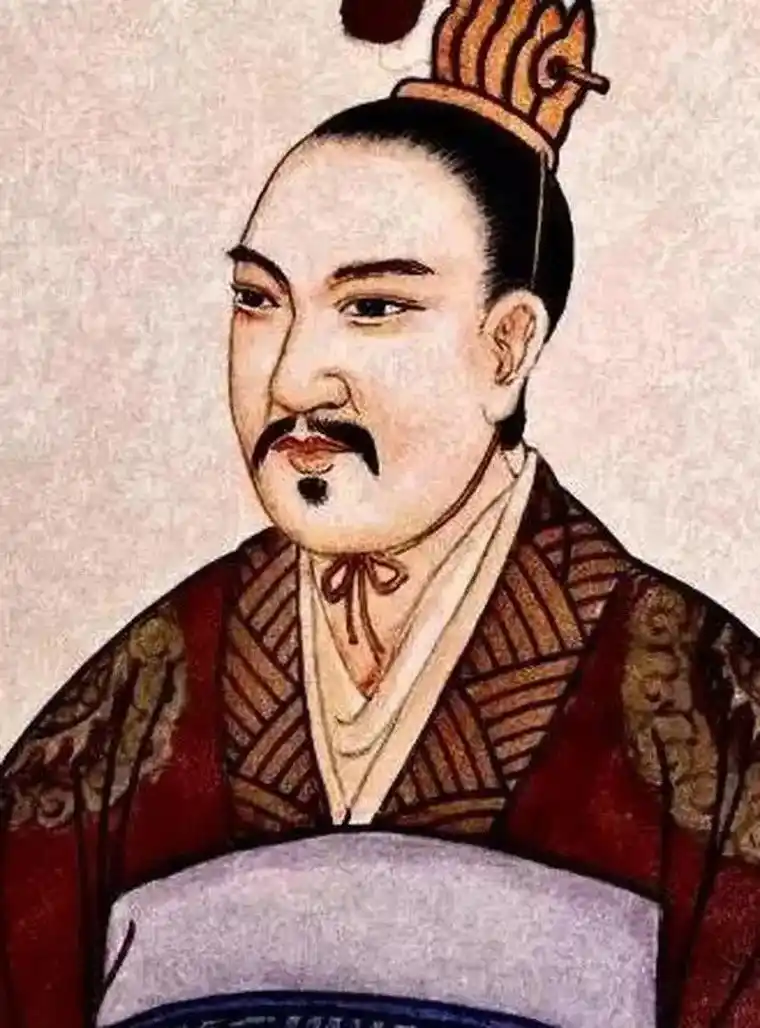
Liu Ying is one of the few Chinese emperors whose name carries almost no weight of its own. He reigned for seven years, from 195 to 188 BC, and in that time the country's taxes were cut, a ban on private book-keeping was repealed, and the walls of the new capital were raised. Yet the standard history of his reign is not his. Sima Qian gave the years of Liu Ying's rule to a chapter called the Basic Annals of Empress Lü, after his mother, and never wrote one for him. The two emperors who followed him — both of them his own sons — were removed from the record almost as completely. For two thousand years the second Han emperor has been a background figure in his own life.
That is the puzzle his short reign poses. He was not overlooked because nothing happened while he was on the throne. He was overlooked because he was never the person deciding what happened, and the men who wrote the histories were more interested in the person who was.
1. A Childhood in Wartime
Liu Ying was born in 210 BC, or possibly 211 — the sources do not settle it — to Liu Bang and his wife Lü Zhi. His father was then a minor local official of the Qin empire; by the time the boy was old enough to remember, Liu Bang was a fugitive with a price on his head, hiding in the hills of what is now northern Jiangsu, and his mother was bringing up two children on her own. Liu Ying had an older sister, who would become known as Princess Yuan of Lu, and an older half-brother, Liu Fei, born to a woman named Cao before Liu Bang married.
The first thing the histories record about him is that his father tried to throw him out of a moving carriage. In 205 BC, after the Han forces seized the Chu capital at Pengcheng and were then routed by Xiang Yu's cavalry, Liu Bang fled west with the remnants of his army. On the road he met his son and daughter and took them aboard his chariot. The pursuit pressed close. According to Sima Qian, the king "pushed the children out of the carriage, three times over," and each time his driver Xiahou Ying, known as the Duke of Teng, climbed down, picked them up and put them back. Xiahou Ying finally kept them on his own horse and drove on, with Liu Bang raging behind him. The children lived. It is worth noting that Sima Qian tells this story without comment, as a fact about the emergency rather than a verdict on the father, and it is the last glimpse we get of Liu Ying as a person rather than a position.
In the sixth month of that year Liu Bang named him King's Heir and left him to hold the town of Yueyang, behind the lines, while the war went on without him. By the time the fighting ended, in 202 BC, Liu Bang had taken the imperial title and Liu Ying, aged about eight, became Crown Prince.
2. The Heir His Father Did Not Want
He was, from the beginning, the wrong kind of son for his father. The histories describe him as ren ruo — kind and yielding, or, less flatteringly, soft. Liu Bang is said to have found him "not like me," and he had a son who was: Liu Ruyi, the child of his favourite consort, Lady Qi. In 198 BC the boy was made King of Zhao, a territory large enough to matter, and Lady Qi pressed her husband relentlessly to name him heir instead. Liu Bang was inclined to agree. He was the founder of a dynasty that might collapse the moment he died, and he judged the succession to be a question of competence, not of order.
The attempt to replace Liu Ying took years and failed for reasons that had little to do with him. In 197 BC Liu Bang raised the question at court, and the censor-in-chief Zhou Chang, who stammered, told him to his face that he would not carry out such an order even if it cost him his head. Empress Lü, listening from behind a screen, knelt to him afterwards and said that without him the crown prince would have been lost. Shusun Tong, the court's master of ceremony, argued the case from precedent and offered to die on the spot. Liu Bang laughed it off and dropped the matter for the moment, but he did not abandon it.
What finally settled the question was a piece of theatre. Lü Zhi, in alarm, forced Zhang Liang, the emperor's most trusted strategist, to advise her; Zhang Liang said that argument was useless and that the only thing that would move her husband was the sight of men he had never managed to attract to his own court. These were the Four Whiteheads of Mount Shang, four elderly scholars who had refused Liu Bang's invitations for years on the grounds that he insulted his guests. Summoned by the crown prince with gifts and a humble letter, they came, and stayed at the prince's side. At a banquet in 195 BC Liu Bang saw four white-haired old men standing behind his son and asked who they were. Told, he was astonished. "I sought you for years and you hid from me," he said. "Why have you come to my son?" They answered that the crown prince was kind and respectful to scholars, and that men would die for him. When they had gone, Liu Bang called Lady Qi over, pointed after them, and said: "I wanted to replace him, but these four are with him. His wings are full; it is too late. Empress Lü will be your master now." Lady Qi wept, and he asked her to dance a Chu dance while he sang a song about a great bird that has already crossed the four seas and cannot be reached by any arrow.
The scene is famous, and it is usually read as a victory for kindness over calculation. It can also be read as a forecast. The two things Liu Bang feared — that his son would be too weak to rule, and that Empress Lü would rule through him — both came true within a year.
3. Accession and the Human Pig
Liu Bang died in the fourth month of 195 BC, and Liu Ying took the throne at about fifteen or sixteen. For a year nothing much was recorded. Then his mother went to work.
Lady Qi had a son, and while the son lived she was a threat. In 194 BC Empress Lü summoned Liu Ruyi, now King of Zhao, to the capital. Emperor Hui understood why. He went out to meet his half-brother at Bashi and brought him back to the palace, kept him in his own rooms, ate with him, slept in the same chamber — and for a while the boy was safe, because there was no hour in the day when the empress could reach him alone. Then one winter morning the emperor rose early to go hunting. Liu Ruyi was young and slept late. When Hui came back, his brother was dead, poisoned in his bed.
What happened next is the passage that fixed Liu Ying's reputation for good. His mother had Lady Qi's hands and feet cut off, her eyes put out, her ears seared, her voice destroyed with a drug, and the wreck of her thrown into a privy. She called the thing ren zhi, a "human pig," and some days later she invited her son to come and look at it. He asked what it was, learned that it was his father's consort, and broke down. He fell ill and did not leave his bed for more than a year. What he said was not a curse or a threat. It was a resignation: "This is not something a human being could do. I am the son of the empress dowager, and I will never be able to govern the empire."
Sima Qian adds one line to the anecdote — that from that day the emperor gave himself up to drink and pleasure and stopped attending to government, "and so he was ill." That sentence has been read two ways ever since. It can mean simply that a young man collapsed and let his mother take over. It can also describe something more deliberate: a public declaration by the emperor that he no longer considered himself qualified, which conveniently relieved everyone of the need to argue about who was actually in charge. Either way, the reign of Emperor Hui is dated from 195 BC, but from 194 BC the empire was administered in the name of Empress Lü, and the officials who did the work reported to her.
4. The Government That Ran Itself
All the same, the government ran, and it ran well. The men who staffed it were the generation that had taken the empire — Xiao He's administrative code, Cao Shen at the chancellery, Zhou Bo and Guan Ying in the armies — and their programme was to leave the country alone. Liu Bang had raised taxes to pay for his campaigns against the kings he had created and against the Xiongnu on the northern frontier. In his son's first year those surcharges were cancelled and the older rate of one part in fifteen on the harvest was restored. In 191 BC the emperor ordered that men known for dutifulness and hard work in the fields be excused from labour service for life, in effect a subsidy paid to model farmers. A law taxing unmarried women at five times the normal rate pushed families to marry their daughters off early, which is to say the state wanted people, both as taxpayers and as soldiers.
The most consequential act of the reign was the repeal, in 191 BC, of the law against private book-keeping. The Qin had forbidden the keeping of books outside the state's own offices, and the early Han had inherited the prohibition without ever enforcing it very hard. Abolishing it did not produce anything immediately; it took another generation before scholars like Jia Yi and Dong Zhongshu were writing, and two generations before Confucian texts became the basis of the examination-style recruitment that shaped the later empire. It is one of the small number of Han measures that later historians have consistently called foundational, though the court that passed it was not thinking about the future of Confucianism. It was tidying up the statutes.
The largest enterprise of the reign was the capital. Liu Bang had built the two great palaces, Changle and Weiyang, but Chang'an had no walls; it was a palace complex with streets around it. Work began in 194 BC with the widening of the roads, and from 192 BC the state began conscripting labour in earnest: 146,000 men and women from within a radius of six hundred li were called up in the spring of that year and released after thirty days, followed by 20,000 convict labourers; another 145,000 in 190 BC. The wall was finished in the ninth month of 190 BC. It ran for about sixty-five li — some twenty-seven kilometres — with twelve gates, three to a side, each gate divided into three passages: one for entering, one for leaving, and the middle one for the emperor. The plan of the western Han capital was essentially settled in those years. Later writers liked to say that Chang'an was by then a city that could be mentioned alongside Rome, which is an exaggeration with a point: it had become a capital in the physical sense, not just the political one.
A story from the chancellery catches the spirit of the period. Cao Shen, who succeeded Xiao He as chancellor, spent his days drinking, and his subordinates did the same; when a visitor tried to raise a matter of business with him, Cao Shen would pour him wine until he was too drunk to bring it up. Somebody complained to the young emperor, who sent Cao Shen's own son to reproach his father on the quiet. Cao Shen had the boy beaten, and when the emperor asked him about it he took off his cap, apologised, and asked: "Which is greater, your majesty — or the late emperor?" The emperor said he could not presume to compare himself with his father. "And do I compare with Xiao He?" the chancellor asked. No, the emperor said. "Then the laws of the high emperor and Xiao He are clear and complete. If your majesty sits in peace and I and my colleagues keep our posts, careful not to lose anything, is that not enough?" The emperor said that it was. The exchange became the standard illustration of wu wei government — governing by not interfering — and it survived because it explained so much about the early Han, including why a reign with a weak emperor at the top could still be a good decade for the countryside.
5. The Brother at the Banquet
The clearest portrait of Liu Ying the man comes from an occasion with nothing to do with policy. In 193 BC Liu Fei, King of Qi, came to court. He was the emperor's elder brother by a concubine, and at the banquet Emperor Hui put him in the seat of honour and treated him as family rather than as a subject. Empress Lü was enraged at the slight. She had two cups of poisoned wine set before the king and told him to rise and drink her health. Liu Fei stood up — and the emperor stood up too, took one of the cups, and prepared to drink with him. The empress dowager, in alarm, snatched the emperor's cup and spilled it. Liu Fei, puzzled, did not drink, pretended to be drunk, and left. He found out later what the wine had been.
He could not leave the capital without permission, and he was afraid he would not survive. His adviser suggested giving up one of his commanderies — Chengyang — as a private estate for Princess Yuan of Lu, the emperor's sister and the empress dowager's daughter. Liu Fei did it, and added the further flattery of addressing the princess as if she were his own mother. Empress Lü was pleased, gave a feast in his honour at his own residence, and let him return home. He died four years later, still in his own kingdom, which is more than could be said for most of his half-brothers.
It is easy to overread the moment. The histories do not say what Liu Ying intended when he took the cup; it may have been instinct rather than a plan, and it worked because his mother could not risk poisoning him. But the same hand that saved his brother was the hand that had been forced to look at a human pig, and both scenes come from the same man. The official historians took the point. Ban Gu, writing the Book of Han, gave his verdict in the formal praise that closes a chapter: "Within the palace, he was kind to his kin; outside it, he honoured his chancellors. He was startled by Shusun Tong's remonstrance and pleased by Cao Shen's answer. He was a ruler of generosity and benevolence. That Empress Lü diminished his virtue — this is cause for grief." Even the century that buried his annals into his mother's gave him that much.
6. A Reign Held in Trust
His family life was arranged for him as well. In 192 BC the empress dowager married him to her own granddaughter — Zhang Yan, the daughter of his sister, a girl of about eleven. The marriage was a statement about kinship, not a partnership, and it produced nothing. When the empress dowager wanted an heir and the young queen had none, she had her pretend to be pregnant, took a son born to one of the emperor's lesser consorts, had the mother killed, and presented the child as the queen's. That boy would be emperor before he was old enough to understand what had happened to him.
Liu Ying died in the eighth month of 188 BC, in the Weiyang Palace, aged twenty-three or twenty-four. He was buried at Anling. At the funeral his mother wept — but, as Sima Qian notices with the precision of someone who knew how such things were read, she wept without grief. Zhang Biqiang, the fifteen-year-old son of Zhang Liang, was serving at court and explained the arithmetic to the chancellor: the empress dowager has lost her only son, and she is afraid of you ministers; give her family commands in the palace armies, put the Lü clan in office, and she will feel safe and will grieve in earnest. The chancellor did as he suggested. The empress dowager was pleased, and wept properly. "From this point," Sima Qian writes, "the power of the Lü family began."
Four years later, when the Lü clan was destroyed, the sons of Emperor Hui were declared not to be his at all, and the four who still held kingdoms were killed to the last man; only two of the youngest, still holding minor marquisates, are said to have survived, and nothing further is recorded of them. His widow, the girl he had been married to, was moved out of the palace and lived on for another twenty-five years without ever being called empress dowager, dying in 163 BC and joining him at Anling.
Sima Qian's decision not to give Liu Ying an annals of his own was not an insult; it was a judgment about where the power lay for those seven years, and the Book of Han later corrected it by giving him a chapter. But the effect has lasted. Liu Ying tends to be judged personally — as the kind boy who could not stand up to his mother — when the more useful question is what his reign did to the state. The answer is that it converted a wartime regime into a peacetime one, cut the tax burden, reopened the libraries and built a capital, and that all of this was signed by an emperor who had announced, publicly and in advance, that he would not be governing. His son was murdered so that another branch of the family could take the throne without contradiction. He is remembered as a good man. Whether he was ever given the chance to be anything else is a question the sources leave open.